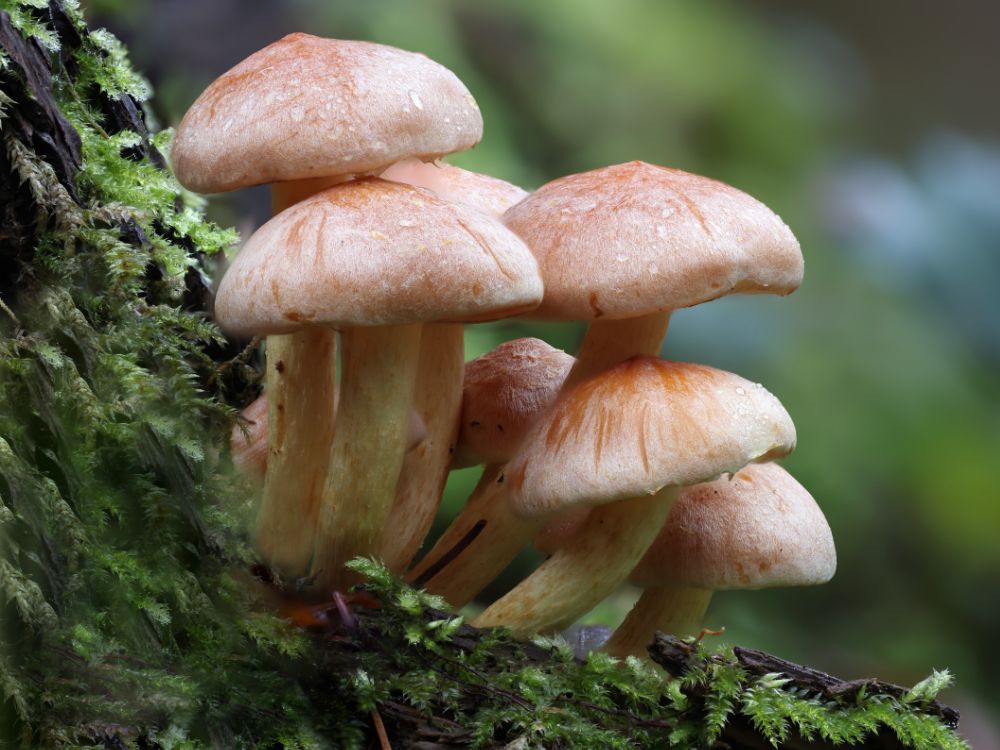
I’ve spent a few years poking around in the woods with a phone in one hand, and I’ve tried more mushroom ID apps than I’d like to admit. Some are great. Some are basically a paywall with a camera attached. This list is the ten I’d actually point a friend to in 2026, ranked by how useful they are when you’re standing over something weird on a log and just want a straight answer.
One thing before we start. None of these, my top pick included, should be the last word on whether you eat something. Apps are good at narrowing things down. They’re not good at telling a deadly Galerina from a honey mushroom in bad light. Use them to learn, then check with a person who knows.
The quick version
| # | Tool | Price | Where it works |
| 1 | MushDex | Free | Web, iOS, Android |
| 2 | mushroom-identification.com | Free | Any browser |
| 3 | Picture Mushroom | Free trial, then subscription | iOS, Android |
| 4 | iNaturalist | Free | Web, iOS, Android |
| 5 | Seek by iNaturalist | Free | iOS, Android |
| 6 | ObsIdentify | Free | iOS, Android |
| 7 | Google Lens | Free | Android, Google app |
| 8 | Shroomify | Free + paid upgrade | iOS, Android |
| 9 | ShroomID | Freemium | iOS, Android |
| 10 | Mushroom Observer | Free | Web |
1. MushDex
iOS / Android / mushdex.com
MushDex is the one I open first, and it isn’t close. You can use it right in the browser or grab the iOS or Android app, and the free scans aren’t capped, which already puts it ahead of half this list. It takes up to three photos, and that matters more than you’d think. Shoot the cap, the gills and the base separately and the results get noticeably better. You get a ranked list with confidence levels instead of one cocky answer, and toxic look-alikes are flagged right there, not buried two taps deep. It also reads the location data in your photo and filters out species that don’t grow near you. They claim 15,000+ species and 92% accuracy. I can’t check that number myself, but it’s been right for me far more often than not.
Best for: Anyone who wants one free tool that covers everything.
2. mushroom-identification.com
If you don’t want to install anything, this is the one. It’s a plain web tool: no account, no app, no watermark. Upload up to three photos and you get back a proper write-up with the scientific and common name, an edibility rating, habitat and season, and key features like spore print color. The part that sold me is the look-alike section. It doesn’t just name your mushroom, it tells you what it could be confused with and why that matters. There’s even a bit on its ecological role, mycorrhizal or saprotrophic and so on, which is a nice touch if you’re into the science and not just dinner. It runs fine in a phone browser too. It only sits at number two because MushDex has the app and the location filtering.
Best for: Quick, no-strings checks from any browser.
3. Picture Mushroom
iOS / Android
Picture Mushroom is probably the most downloaded app in this category, and I get why. It’s slick, it’s fast, and the species pages are well written with plenty of photos. Point, shoot, and you have an answer in a couple of seconds. The catch is the business model. After a short free trial most of the useful stuff sits behind a subscription, and the upgrade prompts show up a lot. The ID also tends to commit to one species with a lot of confidence, which I find a little risky for beginners. Mushrooms aren’t flowers. Sometimes the honest answer is “probably this genus,” and I’d rather an app said so. Still, if you don’t mind paying, it’s a polished tool.
Best for: People who want a polished app and don’t mind a subscription.
4. iNaturalist
inaturalist.org
iNaturalist isn’t a mushroom app. It’s an everything app, and that’s partly why I trust it. You post an observation, the computer vision suggests a name, and then real people, some of them serious mycologists, weigh in. A find only reaches “Research Grade” when the community agrees. That’s slow. You might wait a day or a week, and some fungi never get past genus. But that caution is honest, and it’s exactly what mushrooms need. Your observations also feed real biodiversity research, which feels good. It’s free and run by a nonprofit, and the map of what’s been recorded near you is a great way to learn what to expect this season.
Best for: Learning properly and getting human eyes on a tricky find.
5. Seek by iNaturalist
iOS / Android
Seek is iNaturalist’s simpler, kid-friendly sibling. You hold your camera up and it works out a name live, stepping down from kingdom to order to genus and, if it’s confident, species. I love that it stops when it isn’t sure. If all it gives you is “Agaricales,” that’s a real answer, not a failure. You don’t need an account, and it’s built with privacy in mind, which parents will appreciate. There are badges and little challenges too, so it’s good for getting kids looking at the ground on a walk. The downside is depth. There’s no edibility info and no look-alike warnings, and it won’t help much with anything subtle.
Best for: Families and easygoing nature walks.
6. ObsIdentify
iOS / Android
ObsIdentify comes from Observation.org, a Dutch biodiversity platform, and it’s quietly one of the better image recognizers for fungi, especially if you live in Europe. The model was trained on a huge pile of checked European records, and it shows. It’s more likely to give you a sensible species for something common in a British or Dutch woodland than plenty of paid apps. You can save sightings as observations, and they end up in a real database that volunteers review. It’s free. In North America, though, it’s noticeably less sharp, and the interface feels more like a lab tool than a consumer app. Not pretty, but solid.
Best for: European foragers and anyone who likes recording sightings.
7. Google Lens
Built into Android / Google app
Honestly, Google Lens is what I reach for most when I’m not really foraging, just curious. It’s already on your phone, it’s free, and it’s surprisingly decent with common, distinctive stuff like fly agaric, turkey tail or chicken of the woods. The problem is that it’s a general image search, not a mushroom tool. It matches your photo against pictures on the web, so sometimes “the answer” is a recipe blog or a stock photo. There’s no confidence score and no look-alike warning, and it’ll happily show you edible mushrooms for something that isn’t. Fine for putting a name to a photo. Never for a meal.
Best for: Casual “what’s that on the log?” moments.
8. Shroomify
iOS / Android
Shroomify takes a different route. There’s no photo ID at all. Instead you work through a key: cap shape, gills or pores, color, stem, what it’s growing on. The list narrows as you go. It sounds old-fashioned, and it kind of is, but it teaches you what to look at in a way photo apps never will. After a few weeks with it I caught myself checking gill attachment without thinking. It works offline, which matters deep in a forest with no signal. The database is smaller than the AI apps, it leans toward North America, and some features need the paid version.
Best for: Beginners who want to build real ID skills.
9. ShroomID
iOS / Android
ShroomID (listed in the stores as Mushroom Identifier – Shroom ID) shows up near the top of a lot of searches, and it’s a decent all-rounder. Photo ID is quick, it works offline, and I really like the seasonal calendar, which shows what tends to fruit in your area this month. That’s a smart way to set expectations before you even leave the house. The species pages are good, with lots of close-up images. Like most commercial apps, though, the best features sit behind a subscription and the free version gets pushy. Accuracy was fine on common species and shakier on little brown mushrooms, which is true of almost everything here.
Best for: Planning hunts around the season.
10. Mushroom Observer
mushroomobserver.org
Mushroom Observer is a website, not an app, and it looks like it hasn’t changed much in years. Don’t let that put you off. It’s run by mushroom people for mushroom people, and the community is deep. You upload photos with notes, and experienced members propose names and vote on them. You’ll often get questions about spore prints or smell that no AI would think to ask. It’s free and has been going since 2006, so the archive is enormous. There’s no instant answer, and you need some patience. But when an app gives me something I’m not sure about, this is where I go to double-check.
Best for: Second opinions from people who really know fungi.
How I’d actually use these
If you only take one thing from this list: use two tools, not one. I’ll usually run a find through MushDex first, then compare it with mushroom-identification.com or post it to iNaturalist if I’m unsure. When they disagree, that’s your sign to slow down.
And the rule that never changes: an app can tell you what something probably is. It can’t tell you it’s safe to eat. If you’re planning to cook anything you picked, get it checked by an experienced forager or your local mycological society first. When in doubt, leave it out.